Showing posts with label churches. Show all posts

Saturday, May 23, 2020

Fidelity (The Return)


We finally made it to Fidelity after our previous disastrous attempt in July 2019, in which I got stuck in the mud just west of Bittersweet Road, tore off our van's bumper, and had to walk to Highway 75 in flip flops and jeans over the gravel roads. 

But, as I said, we finally made it! St. Augustine's Church is lovely, and the graveyard across the street was full of flags in preparation for Memorial Day.

The fields in the surrounding countryside were full of old cornstalks cut short in last fall's harvest. The day was cloudy, but sharp shafts of sunlight blazed down through gaps in the clouds. 

We explored the cemetery, pausing at tombstones that caught our interest. We were especially saddened by the ones where babies were buried - young lives snuffed out by disease long before their old age. Lila Wiltz was one such: She lived from 1919 to 1920. Another tombstone proclaimed simply, "Bakers Infants, 1941-1941." So much heartache expressed in so few characters carved into stone!

As we were wandering through the graveyard, we noticed that a lady had come out onto the porch of a neighboring home. It was Mrs. Meyer, who lives in the old "Sister House" across the street from the church. She has lived alone there for the past three years since being widowed. She was wondering if we wanted to look around inside the building; she had the key.

We definitely wanted to look inside, and so we took her up on her offer. Within the church, we could feel and smell the age of the place. The wooden fixtures had the fine patina that only generations of hands can lend. The walls had pictures of the nuns who had served the people of this community as teachers before living out their twilight years in the Sister House.

It was a good way to spend Memorial Day, when we remember the people we have loved and lost, but also when we remember our own coming deaths. This little town -- what's left of it, anyway -- definitely has the feeling of a place that is dying, and so it led our hearts to consider our own mortality, as well as what lies on the Other Side.


Sunday, February 16, 2020

St. Paul


After a full weekend of exploring southeast Kansas, we were ready to head home. But we thought we'd visit one more town on the way: St. Paul

The name of the settlement used to be the Osage Catholic Mission, but after the U.S. government drove the tribe off their ancestral lands, the town was renamed to St. Paul.

We were attracted to this little town by the spire of St. Francis Hieronymo Catholic Church, which we saw from miles away. Across the street from the church are the Neosho County Museum and the Prairie Mission Retirement Home. 

St. Paul is actually a pretty bustling place for only having a population of 629. It has a market, a carwash, a cafe, and a gas station, as well as a business district with several small shops.

After exploring St. Paul for a little while, we stopped at a gas station for snacks and to use the restroom, and Maddie wanted to display her fashion sense next to the display of Natty Light. Poor Zed started out the trip home cool as a cucumber in Mom's sunglasses, but eventually succumbed to slumber in the back seat.


Greenbush


Greenbush is the home of St. Aloysius Church, which legend says was founded by a priest who was caught in a thunderstorm near this site. 

The neighborhood has a history of Catholic piety, as you can see from the grotto of St. Mary that was built by parishioners here. The church has been closed since 1993, but the historical site lives on, a testament to the faith of the Catholic settlers in this part of Kansas. 

In addition to the ruins of the 1902 church and the 1986 church building, this site also has a picnic area, a camp and retreat center, and a sidewalk that takes visitors through the stations of the cross. 

Nearby is the Greenbush Education Service Center, which serves schools throughout southeast Kansas. We also saw a seed company and a fabric store in the neighborhood.


Beulah


Beulah's Main Street is gravel, and there are cattle pens lining it. There are also two churches here: Crossroads Baptist Church and Beulah Community Church. In other words, it's a place that's hanging onto its identity, and there are people here who want to keep their community going. The modest homes and quiet gravel roads in this neighborhood underscore that point.

Cherokee


Just outside of Cherokee, we crossed some dead train tracks, where I found two beautiful ladies posing, so I figured I'd snap their picture before we moved on.

A little further on, we saw some cats crossing the road, whereupon they turned to each other and began to lick one another diligently. "Look, Daddy!" the kids said, "Kissin' kitties!"

Cherokee itself boasts several churches, a cemetery, a downtown area with some thriving shops, a school, a city hall, and a number of small houses (some in good repair, others not so much). 

We were surprised at how busy First Baptist Church was in Cherokee -- It seemed like there were more people in that parking lot than lived in the whole town.

Chicopee


After several more sparsely populated places, it was fun to see that Chicopee had a number of nice homes, as well as an Anglican church. The houses got more expensive as we approached the Crawford Country Club (which, come to think of it, may also explain the presence of the Anglican church here). 

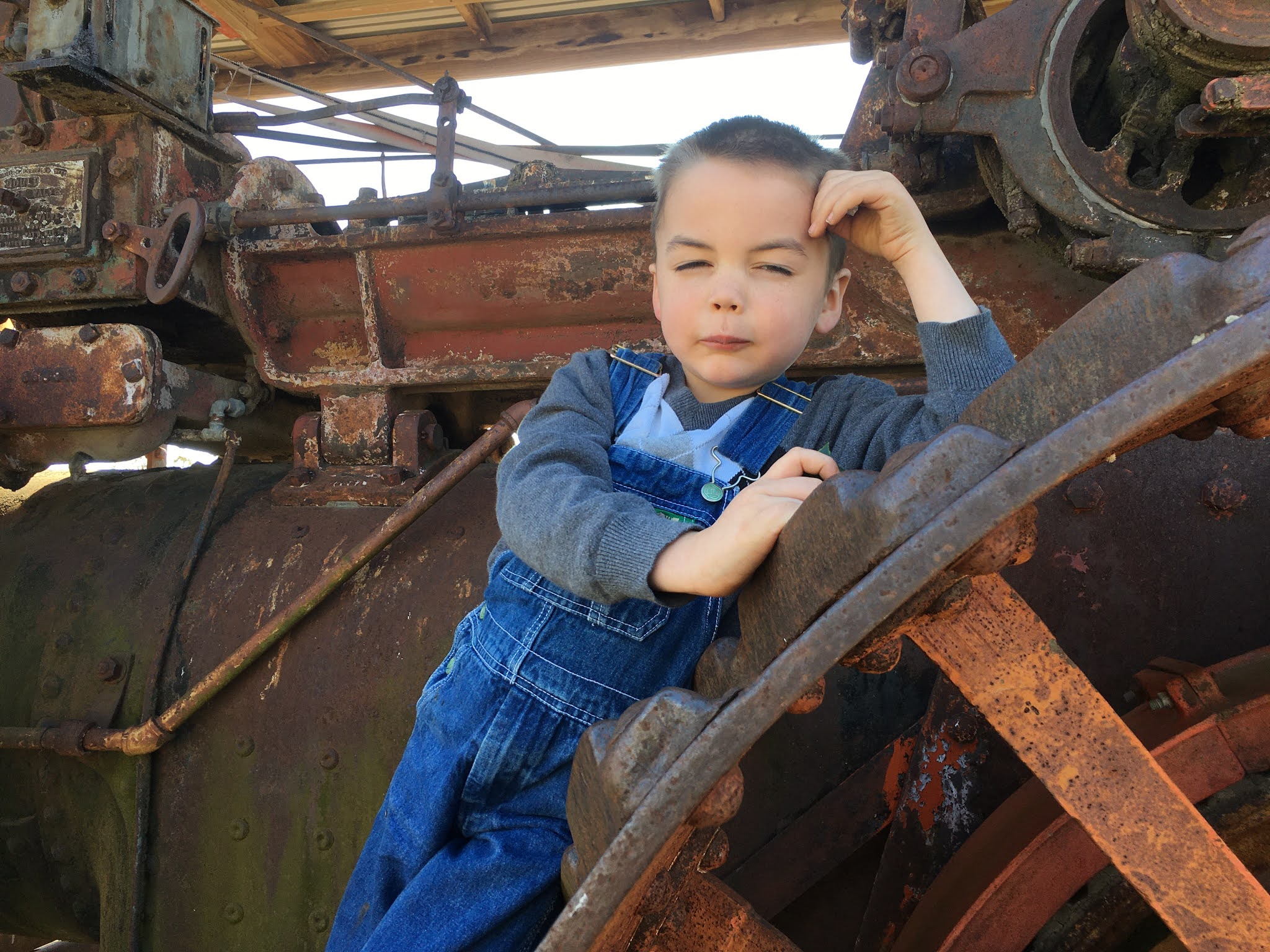
The town had a couple of empty stores, as well as a plant nursery. And, of course, a really cute little boy in overalls smiling in front of the church. 

Frontenac


Frontenac is a little town that feels like a suburb of Pittsburgh, but still has its own personality. We really liked walking through the Wilderness Park, and we were also charmed by the community burn pile. The town's trashcans are distinctively painted in a yellow-and-red or yellow-and-pink pattern, and they are very proud of their Raiders athletic teams. 


Saturday, June 8, 2019

Horton


Horton is a quiet little town of a little less than 2000 that has recently been working hard to renew, refresh, and reinvent itself. Recent changes include a nearly new town swimming pool!

The streets were quiet and we saw several nice buildings, including St. Leo's Church, which was very pretty! We had to be sure to stop by the mortuary that our friends Chuck and Phyllis Maple used to own.

We were also hungry, so we stopped at Grandma's Depot Cafe and had a nice lunch. The kids loved the model train outside and the train decorations and memorabilia inside!

I bought a copy of The Brothers Karamazov at the cafe's gift shop. I mentioned that I really like Dostoevsky, to which the proprietress gestured vaguely and responded, "Oh, yes -- we sell a lot of religious books here."


Muscotah


Muscotah is a baseball town, largely because it was the home of the famed Cubs shortstop Joe Tinker. As we drove into town, we saw this yard with a rose garden reminiscent of a wooden backstop, metal silhouettes of ball players, and an epic garden shed shaped like a baseball (including "stitches" made of red rebar). Here's an interesting post relating to how this baseball was made.

No one was home at this house, so we didn't stay long, but the kids couldn't resist mimicking the poses of the lawn ornaments, and I couldn't resist taking a picture of this remarkable shed. (Which, it turns out, was originally a water tower tank!)

In the city park, there's a monument to Tinker, as well as a mural featuring him, Evers, and Chance (the other two ballplayers who were part of the same immortal double play).

The homes in this town were modest and well-maintained, and the lawns were neatly trimmed. The town roads were gravel.

On the edge of town, we saw a beautiful old ruined church, though there's also a nice Church of Christ building in Muscotah as well.


Saturday, May 6, 2017

Porterville


Porterville was little more than a house on the corner and an old, ruined church with ivy growing all over it. Like several other vanishing places in Bourbon County, it has never really been much more than a post office... and the post office closed in 1905.

Tired out from our adventures, we headed home for some rest. We had a lot of fun in Fort Scott, but we haven't found much else in Bourbon County that would be worth our while to visit again.

Hiattville


In Hiattville, we saw many older homes, some well-kept lawns, and a quaint country church with a smiley face painted on its propane tank.

This town was once much more populous and prosperous than it is today. However, it was not immune from the common trend of urbanization that has smitten so many of the small towns in Kansas. It simply doesn't make economic sense for a lot of these towns to continue on, and so they slowly decline. The presence of the church here is a hopeful sign, because it helps to maintain a sense of community.

See this paper for more information on the history and decline of Hiattville.


Saturday, March 4, 2017

Purcell


Purcell is a small neighborhood surrounding St. Mary's Catholic Church. The town was founded around 1886, and the church was erected around 1898. While there, we took a ride on this playground device, which we dubbed the St.-Mary's-Go-Round.

Saturday, July 16, 2016

Iola


We stayed the night at a motel in Iola. This bustling little town of around 6,000 is the county seat of Allen County and home to Allen County Community College. It also features a large, beautiful town square (with an ENORMOUS clock), a war memorial (larger than the one we saw in LeRoy), and the Bowlus Fine Arts Center.

Of course, the other (less historic) side of town also features a National Guard armory and several stores such as AutoZone, Dollar General, and Orscheln. There is also a Wal-Mart, whose parking lot held more cars than were in the parking lots of all the other stores combined. In all, it seemed like a pretty typical rural county seat. Though it was pretty well settled, the agrarian culture was still all around us. For example, our motel's swimming pool looked out onto a field of ripening corn!

I got a pretty good look at much of the town as I ran from our motel to Carlyle and back, beginning around 4:45 a.m. The streets were well-maintained and not too busy at that time of day. By the time my run was over, though, the main highway was starting to see quite a bit of Saturday-morning traffic.

On the north side of town, I ran past a large, aromatic livestock farm of some sort -- I'm not sure whether it was cows or pigs. On the side of their barn, were two huge strings of lights in the shape of a cross. When I passed by again after sunrise, the lights were off and I could see no hint of the cross. I wonder if I'm like that, too -- can people always see a reminder of Christ in me, or is it more apparent when I'm in darkness and need His presence most? That's the kind of thing you think about when you're running past a smelly barn in the country.

There were many churches in Iola, ranging from the stately Presbyterian (PCUSA) and United Methodist churches downtown to an old red brick African Methodist Episcopal church on the edge of town to a plain, unassuming Baptist Temple - Fundamental. Myrick asked, "Why are there so many churches in this town, Dad?" I responded that it was probably full of people who loved Jesus -- or at the very least, the idea of Jesus.

We noticed an old building a couple of blocks away from the town square, so we got out to explore the outside a bit. It turned out to be the historic Allen County Jail, built in 1868. Pretty nifty, but niftier still was what happened next.

Across the street, a young man pulled up in a white sedan. As he got out, he called over to us, "Hey, do you guys want a tour of the jail?" Yes and please.

He showed us through the tiny cells downstairs, including lots of original graffiti from the 90 years it was in operation. One of our favorites was the astute observation that "CRIME DOSENT PAY."

Then, we climbed the steep stairs to see the area that would have been the sheriff's living quarters. In the early days, the sheriff and his family lived upstairs, and his wife and daughters would do the cooking and laundry for the staff and prisoners. One of the decorations on the wall was a collection of art that a jailer's daughter had made from human hair. We tried to get a picture of it, but as you can see, it's pretty blurry.

We really enjoyed the jail visit -- it was a great way to catch a glimpse of the people who had worked hard to make this little town what it is today.


Friday, July 15, 2016

LeRoy


LeRoy is a modest little town with a library, senior center, cafe, bars, schools, shops, and a historic downtown area.

On our way into town, Magen took grim amusement in the fact that the cemetery was located right next to Reaper Road.

We were interested to see that an old church had been converted into a store called "Barbie and More."

In one of the parks, we saw a memorial building with a funny name. It turns out that it was a memorial to the Muscogee Creek chief and orator Opothleyahola. Pretty cool for a history nerd like me!

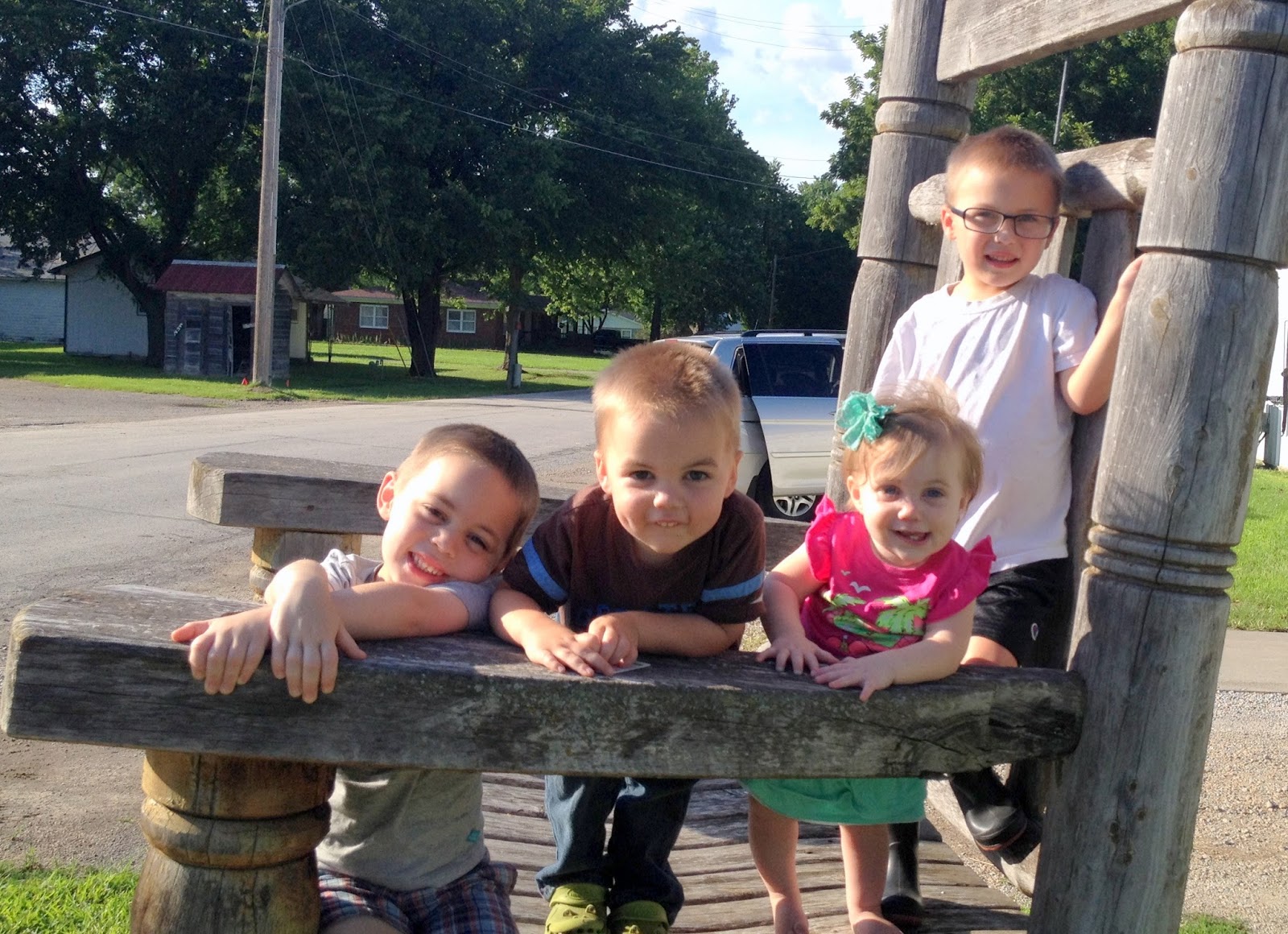
We also saw a beef jerky factory founded by a man named (no kidding) Martin Luther with some fascinating yard art outside. The boys especially enjoyed the enormous wooden rocking chair.

Downtown, they have a large, colorful mural. We've seen this in a couple of other SE Kansas towns, as well. It seems like a fun way to hark back to the town's roots.

LeRoy does have a small co-op, and of course the railroad also runs through town. Much of the farmland around here is peppered with small -- almost portable-looking -- oil wells, pumping slowly away. They look like they haven't changed much lately, and neither has the town itself.

Overall, I'd say that the cool-stuff-to-see ratio was pretty high in this fun little town. A great start to our Southeast Kansas trip!